I’m Out of Shape. Should I Get Fit Before Starting CrossFit?
No, you do not need to get fit before starting CrossFit. In fact, getting fitter is the reason you start.
If you feel out of shape, haven’t exercised consistently in years, or are nervous that you won’t be able to keep up, you can still start CrossFit. CrossFit workouts can be adjusted to your current fitness level, strength, experience, and physical limitations. A good coach will help you choose the right version of the workout for where you are today.
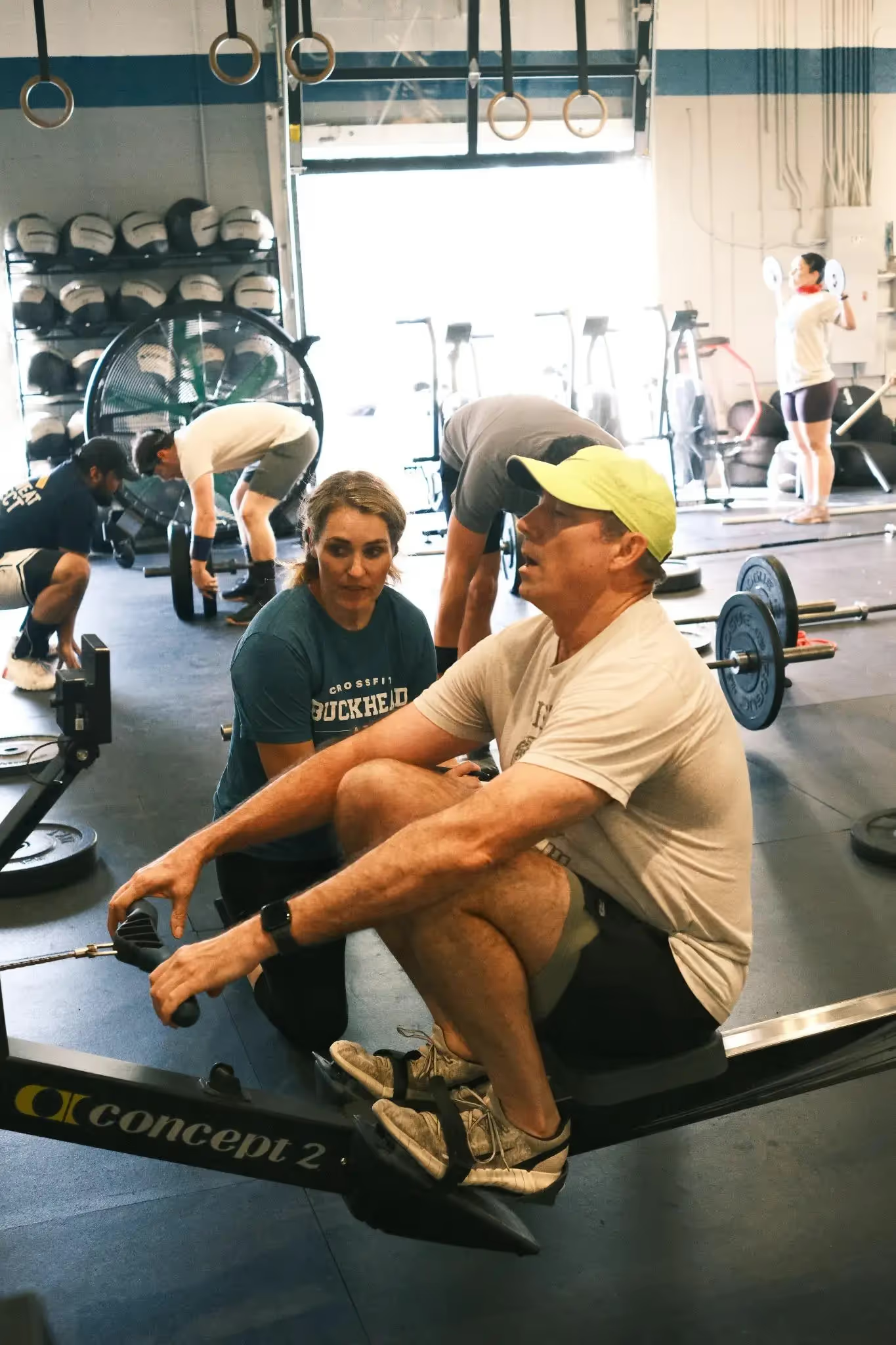
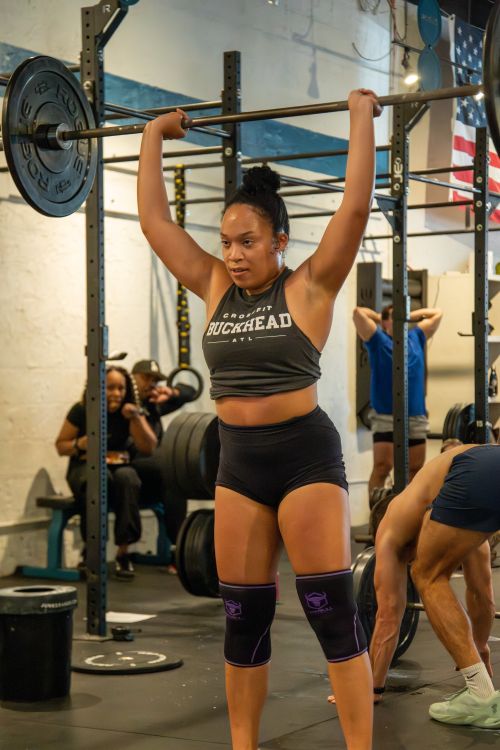
At CrossFit Buckhead in Atlanta, we know walking into a CrossFit gym for the first time can feel intimidating. You may see barbells, pull-up rigs, rowing machines, and people doing movements you’ve never tried before and think, I need to get in better shape before I can do this.
You don’t.
You just need to start.
Why You Don’t Need to Be in Shape to Start CrossFit
One of the biggest misconceptions about CrossFit is that you need a certain level of fitness before joining.
It makes sense. Most of what people see of CrossFit online tends to feature experienced athletes lifting heavy weights, doing pull-ups, or finishing very challenging workouts. That’s CrossFit... but it’s not the only version of CrossFit.
The foundation of CrossFit is functional fitness: learning and practicing movements that help you become stronger, more capable, and better conditioned. Those movements and workouts can be scaled to meet you where you are.
That means two people can take the same class and have very different workouts.
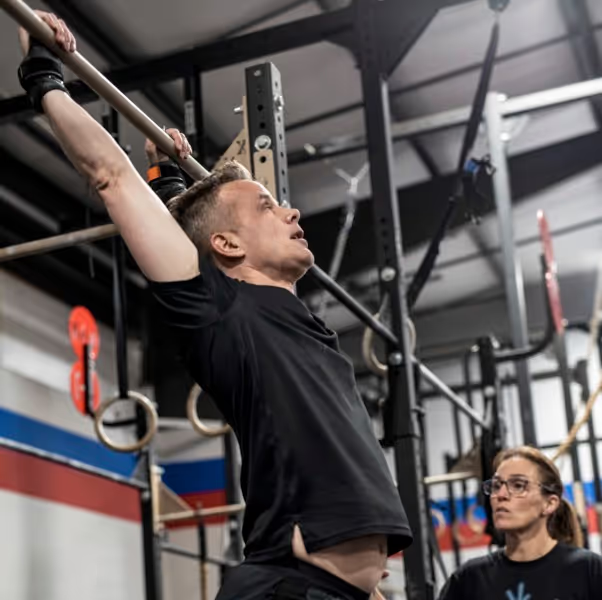
One person might squat with a barbell while another uses a lighter weight or modifies the range of motion. Someone may run while another person uses a bike or rower. One athlete might do pull-ups while someone else works on a variation that helps build the strength needed to eventually do one.
They’re all participating in the same class and working toward the same goal: improving their fitness.
“But What If I’m REALLY Out of Shape?”
You’re still allowed to start.
You do not need to lose weight first. You don’t need to start running. You don’t need to spend a few months at a traditional gym. And you definitely don’t need to learn how to do a pull-up before walking through our doors.
If anything, trying to “get in shape for CrossFit” on your own can mean delaying the exact thing that could help you build that fitness: consistent, coached exercise.
At CrossFit Buckhead, our coaches aren’t expecting a first-time athlete to move, lift, or perform like someone who has been training for five years.
Our job as coaches is to look at the workout, understand its intended purpose, and help you find an appropriate version for your current ability.
That’s an important distinction.
Scaling isn't about making a workout “easy.” It’s about making it appropriate.
What Does Scaling a CrossFit Workout Actually Mean?
Scaling means adjusting a workout's movements, weights, repetitions, range of motion, or intensity so you can train safely and effectively at your current fitness level.
Scaling is a normal part of CrossFit, not something reserved only for beginners.
For example, imagine the workout includes running, box jumps, and barbell deadlifts.
Depending on the person, a coach might adjust it by:
- Swapping some or all of the running for a bike or row.
- Using step-ups instead of box jumps.
- Lowering the box height.
- Reducing the barbell weight.
- Adjusting the number of repetitions.
- Modifying the total volume of the workout.
The goal isn't for everyone in class to use the same weight or complete identical movements. The goal is to preserve what we're trying to accomplish with the workout while giving each person an appropriate challenge.
That’s where coaching matters.
What If I Can’t Do Most CrossFit Movements Yet?
We don't expect you to.
You might not be able to do a pull-up when you start. Maybe you've never touched a barbell. You may not know the difference between a clean and a snatch and that's completely fine.
You’ll learn.
Every CrossFit movement has progressions. Instead of simply telling someone, “You can't do this yet,” our coaches can help find a version they can do while developing the strength, coordination, mobility, or confidence needed to progress.
And progress doesn't always mean eventually performing the most advanced version of every movement.
For one person, progress might be getting their first pull-up. For someone else, it could be squatting comfortably to a greater depth, picking something heavy off the floor with confidence, or making it through a workout without needing as many breaks.
Your progress is your progress.
What If I Haven’t Exercised in Years?
Starting slowly is a good thing.
If you've been inactive for a long time, jumping immediately into five or six hard workouts per week probably isn't the smartest approach. Your body needs time to adapt to strength training, conditioning, and regular movement again.
For many beginners, the first few weeks are less about chasing scores and more about learning movements, understanding how classes work, figuring out appropriate weights, and building consistency.
Your fitness develops from there.
One of the advantages of group training at CrossFit Buckhead is that you aren't left alone to figure everything out. A coach is there to explain the workout, teach movements, watch how you're moving, and help you make adjustments.
You don't have to know what you're doing before you arrive.
That's part of why we're here.
What If I’m Older Than Everyone Else?
This is another fear we hear from people considering CrossFit.
CrossFit isn't reserved for people in their 20s.
Adults in their 30s, 40s, 50s and beyond can benefit from appropriately programmed and coached strength training and functional fitness. And as we get older, maintaining strength, muscle, balance, coordination, and the ability to confidently perform everyday tasks becomes increasingly important.
The workout doesn't need to look exactly the same for every age or every body.
That’s the point of coaching and scaling.
What If I Have an Old Injury or Physical Limitation?
Tell your coach.
A previous injury doesn't automatically mean you can't do CrossFit. It may mean certain movements need to be adjusted based on your current abilities and any guidance you've received from a qualified healthcare professional.
At CrossFit Buckhead, we want to know when something doesn't feel right or when you're dealing with a limitation. That gives us the opportunity to help you modify movements rather than feeling like you have to push through something simply because it's written on the board.
There is a big difference between the normal challenge of exercise and ignoring pain or a physical limitation.
Good training isn't about proving how tough you are. It's about finding ways to keep moving forward.
What Your First CrossFit Class Is Really About?
Your first class isn't a test.
Nobody expects you to walk into CrossFit Buckhead already knowing the terminology, movements, or how much weight you should use.
You’ll have a coach guiding you through class, and you'll have opportunities to ask questions. If something needs to be changed, we'll change it.
You also don't need to keep up with the person beside you.
They may have been training for years. Their workout isn't your workout.
Especially when you're new, we'd much rather see you leave feeling like you had a good workout and learned something than completely exhaust yourself trying to prove you belong.
You already belong in the room.
CrossFit vs. Getting Fit at a Traditional Gym First
If your ultimate goal is to try CrossFit, you don't need to spend several months at another gym preparing for it.
A traditional gym can absolutely help someone improve their fitness, but going there first isn't a prerequisite for CrossFit.
Think about it this way: if you're unfamiliar with exercise, walking into a gym by yourself and trying to create your own “CrossFit preparation program” may actually give you less guidance at the time you need it most.
CrossFit provides structure.
You show up. The workout is planned. A coach explains it. We teach the movements. We help you choose appropriate modifications. Then you train alongside other people doing their own version of that day's workout.
For someone who isn't sure where to begin, that structure can be incredibly helpful.
FAQ: Starting CrossFit When You’re Out of Shape
Do I need to lose weight before starting CrossFit?
No. Weight loss is not a prerequisite for starting CrossFit. Workouts can be modified based on your current fitness and ability.
Do I need to be able to run before starting CrossFit?
No. Running is only one form of conditioning, and coaches can often adjust distances or use alternatives such as rowing or biking when appropriate.
Do I need to know how to lift weights?
No. You can learn. CrossFit classes include coaching and instruction, and weights can be adjusted while you develop technique and strength.
Is CrossFit for beginners?
Yes. CrossFit for beginners should focus on learning movements, finding appropriate modifications, gradually building intensity, and developing consistency rather than trying to match experienced athletes.
How often should a beginner do CrossFit?
There isn't one perfect number for everyone. Your training history, schedule, recovery, and goals all matter. If you're starting from very little activity, building a manageable routine and gradually increasing your training is often more useful than trying to do as much as possible immediately.
You Don’t Have to Get Ready Before You Start
If you've been searching for CrossFit in Atlanta but keep telling yourself you'll try it once you're a little stronger, a little lighter, or a little more in shape, consider this your permission to skip the preparation phase.
Come as you are.
You don't need to prove that you're fit enough to join CrossFit Buckhead. Our job is to help you figure out where to start and build from there.
If you're nervous, that's okay. Tell us. If you haven't worked out in years, tell us that too. If there are movements you're worried about, we want to know.
Come try a free first class at CrossFit Buckhead. We'll help you understand the workout, find the right starting point, and experience CrossFit without feeling like you were supposed to get fit before you arrived.
Because getting fit isn't the prerequisite.
It's the point.